

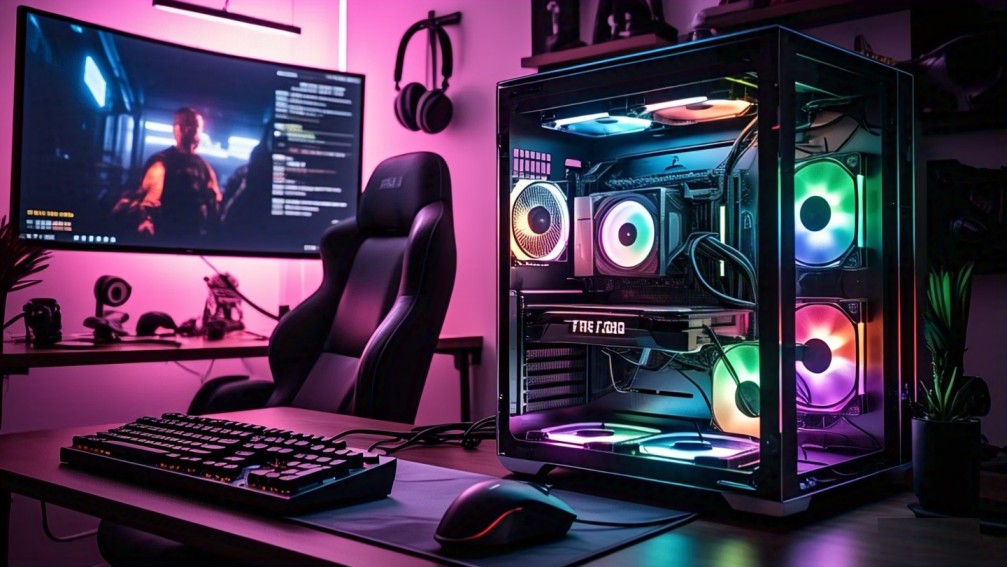
Gamers and creators, the wait is finally over! Nvidia has officially launched its new GeForce RTX 5050 GPU for desktops and gaming laptops — and it’s already making waves.
With promises of next-gen performance, power efficiency, and AI-powered enhancements, the RTX 5050 is shaping up to be one of Nvidia’s most exciting launches for budget-conscious gamers and mid-level creators. Whether you’re looking to build a new PC, upgrade your gaming laptop, or simply stay on top of the latest tech — this GPU is worth your attention.
In this article, we’ll break down everything you need to know about the RTX 5050, from its specs and pricing to what makes it stand out.
🔧 What Is the Nvidia GeForce RTX 5050?
The Nvidia GeForce RTX 5050 is the latest entry-level graphics card in Nvidia’s RTX 50 series lineup, designed for smooth 1080p and even 1440p gaming, content creation, and general high-performance computing. It’s built on Nvidia’s new Ada Lovelace Refresh architecture, offering solid improvements over the previous generation — including better ray tracing, DLSS 3.5 support, and greater power efficiency.
This GPU is geared toward mainstream gamers and creators who want a capable graphics card without spending a fortune.
💰 Price & Availability
As of launch, the desktop version of the RTX 5050 is priced at $199, while gaming laptops featuring the RTX 5050 start at around $899, depending on the brand and other specifications.
Here’s the quick breakdown:
-
Desktop GPU: $199 USD (founder’s edition and partner cards available)
-
Gaming Laptops: Starting at $899 USD (available from brands like ASUS, MSI, Acer, and HP)
The RTX 5050 is now available globally via online retailers, major electronic stores, and directly through Nvidia’s partner network.
⚙️ RTX 5050 Specifications
| Feature | Details |
|---|---|
| Architecture | Ada Lovelace Refresh |
| CUDA Cores | 3584 |
| Base Clock Speed | 1500 MHz |
| Boost Clock Speed | Up to 2250 MHz |
| Memory | 8GB GDDR6 |
| Memory Bus | 128-bit |
| Ray Tracing Cores | 28 |
| Tensor Cores | 112 |
| DLSS Support | DLSS 3.5 |
| TDP | 115W |
| Outputs | HDMI 2.1, DisplayPort 1.4a |
| PCIe Interface | PCIe 4.0 |
🕹️ Gaming Performance
In terms of real-world gaming performance, early benchmarks show that the RTX 5050 delivers a solid 60–100 FPS on most AAA titles at 1080p on medium to high settings. Some optimized games with DLSS enabled can even push past 100 FPS consistently.
Here’s how the RTX 5050 performs in popular titles (1080p High Settings):
-
Call of Duty: Modern Warfare III – 95 FPS (DLSS ON)
-
Cyberpunk 2077 – 70 FPS (DLSS Balanced + RT Low)
-
Fortnite – 120 FPS
-
Valorant – 180+ FPS
-
GTA V – 90 FPS
-
Red Dead Redemption 2 – 65 FPS
DLSS 3.5 makes a huge difference, allowing games to run smoother with less strain on the hardware. The ray tracing capabilities are decent at low to medium levels, though high RT settings will push the card to its limits.
🎨 Creative Work & Productivity
While the RTX 5050 is designed with gamers in mind, it also performs well in creative workloads. Video editors, 3D artists, and streamers will find it capable of handling tasks like:
-
1080p/1440p video editing in Adobe Premiere Pro and DaVinci Resolve
-
Basic 3D modeling and animation in Blender or Maya
-
Live streaming with Nvidia’s Broadcast and AV1 hardware encoding
-
AI-enhanced tools (e.g., image upscaling, noise removal, etc.)
It’s not a workstation-class GPU, but it’s more than enough for light to mid-level creative projects — especially at this price point.
🤖 AI Features with DLSS 3.5
One of the key features that sets the RTX 5050 apart from older cards is its support for DLSS 3.5, Nvidia’s latest AI-powered upscaling and frame generation technology.
This lets games and creative apps look better and run faster — especially useful in titles that support ray tracing or demand high frame rates. Even if the raw power of the card isn’t top-tier, DLSS bridges the gap and makes the experience feel much smoother and modern.
Additionally, Nvidia Reflex, Ray Reconstruction, and RTX Video Super Resolution are all supported — bringing high-end features to entry-level hardware.
🧊 Cooling & Power Efficiency
Thanks to its lower TDP of 115W, the RTX 5050 doesn’t require massive cooling setups or huge power supplies. Most users can get away with a 450W–500W PSU, and compact PC builds will benefit from the GPU’s compact dual-fan designs from brands like Zotac and Gigabyte.
Laptop versions of the RTX 5050 are also energy-efficient, giving you longer battery life when gaming on the go.
📦 Who Should Buy the RTX 5050?
The RTX 5050 is perfect for:
-
Gamers on a budget who want reliable 1080p/1440p performance
-
Laptop buyers looking for a balanced gaming/editing experience
-
First-time PC builders or those upgrading from older cards like GTX 1650/GTX 1660
-
Content creators and students who use Adobe Suite, OBS, or Blender
-
Anyone interested in Nvidia’s AI features without spending $500+
If you’re a competitive gamer playing esports titles, or someone who loves modded single-player games, this GPU delivers great value at its price.
🔮 The Road Ahead
With the RTX 5050 now on the market, Nvidia’s 50-series lineup continues to expand. Rumors suggest we’ll see RTX 5060 and 5070 cards later this year — but for now, the 5050 fills a much-needed space for entry-level gamers.
It’s also likely that more laptops featuring this GPU will appear in back-to-school sales, making it one of the most accessible ways to enjoy high-quality gaming without breaking the bank.
✅ Final Thoughts
The Nvidia GeForce RTX 5050 hits the sweet spot between price and performance. It’s a worthy upgrade for anyone using older GPUs and offers modern features like DLSS 3.5, ray tracing, and AV1 encoding that were once reserved for high-end cards.
Whether you’re building your first gaming PC, need a capable editing machine, or just want a reliable GPU for daily use — the RTX 5050 is a smart choice that brings next-gen features to more people.
Related – PS Plus Monthly Games for July: Diablo IV, The King of Fighters XV, and Jusant Are Coming

2 Comments
Thank you for your sharing. I am worried that I lack creative ideas. It is your article that makes me full of hope. Thank you. But, I have a question, can you help me?
Can you be more specific about the content of your article? After reading it, I still have some doubts. Hope you can help me. https://www.binance.info/register?ref=QCGZMHR6